ServicesMetal Roofing
Metal Roofing in Indianapolis
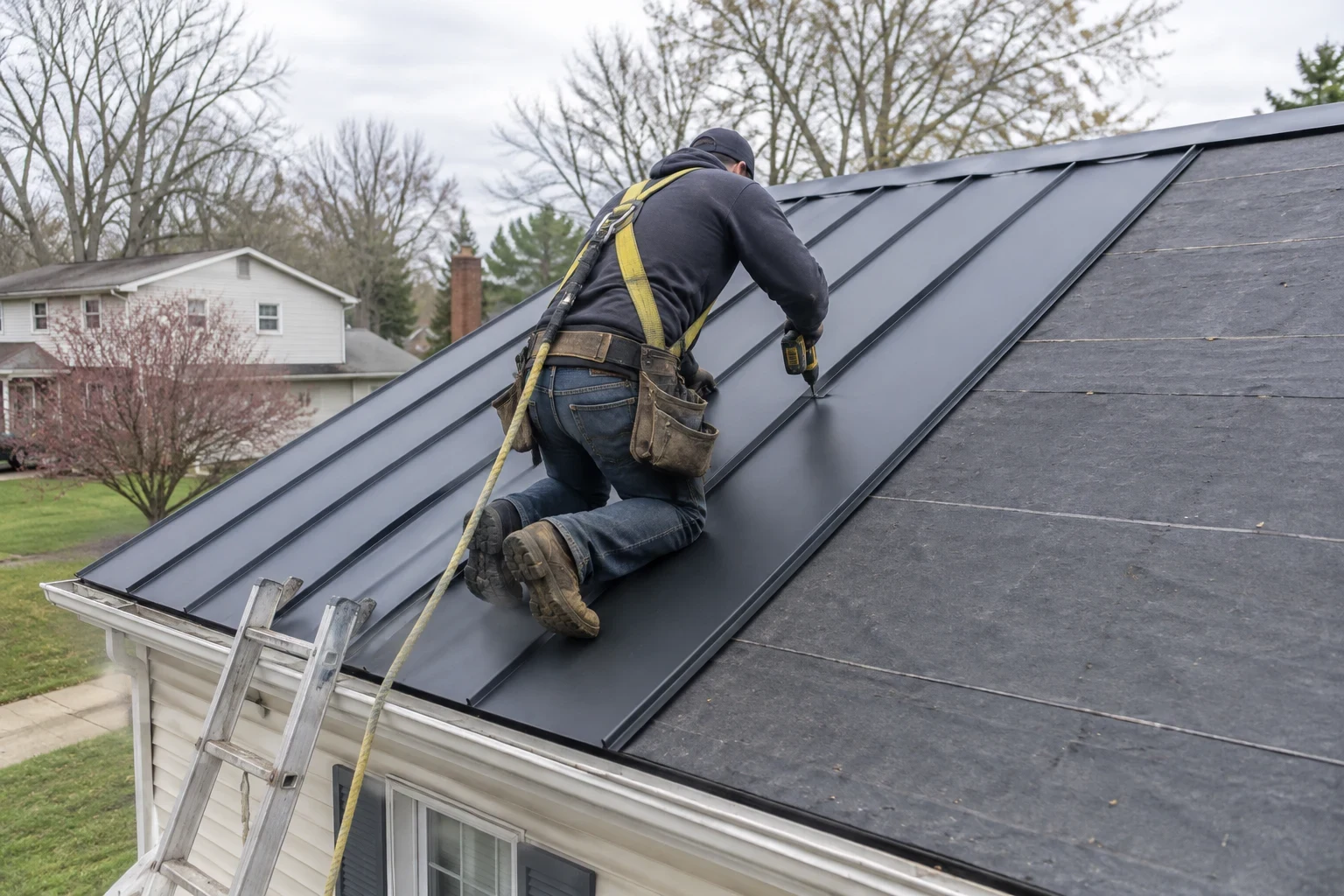
A metal roof can last decades, shed snow on its own and reflect a good share of summer sun before it heats your attic. We help you decide if metal fits your home and budget, then install it carefully from deck to ridge.
When metal is the right call for your home
Metal makes the most sense when you plan to stay in your home a long time, you are tired of replacing shingles, or your upstairs rooms run hot every July. Painted steel panels with reflective pigments bounce back much of the sun's heat that dark asphalt soaks up, so less of it reaches the attic and your air conditioner has less to fight.
We are honest about the limits. Metal by itself is not insulation. The comfort gain depends on attic ventilation and the insulation under the deck, so we look at all three during the inspection and tell you plainly what will and will not change your energy bills.
If metal is not a good fit, we will say so and walk you through shingle roofing or other options instead.
What goes into every metal roof we put on
Stripping down to bare wood
The old roofing comes off completely so we can see the deck underneath. Any soft or rotted sheathing gets replaced first, because panels set over a weak spot will show every dip.
High-temperature underlayment
Metal surfaces get hot, so we use a synthetic underlayment rated for it, plus ice and water shield along eaves and valleys where winter ice tends to back up.
Panels and finish of your choice
Standing seam panels hide their fasteners and let the metal expand and contract freely. Exposed-fastener panels cost less up front. We show you finish colors and explain which lighter shades reflect the most heat.
Ventilation that works with the roof
Ridge vents and intake at the soffits let hot attic air escape. This is often where the real difference in summer comfort comes from.
Flashing, trim and penetrations
Chimneys, skylights, vent pipes and walls get custom-bent metal flashing and boots made for metal roofs, since those are the spots where leaks usually start.
Cleanup with a magnetic sweep
We tarp landscaping during tear-off and run magnets across the lawn and driveway so stray screws and nails do not end up in your tires.
Signs a metal roof may be worth a look
- Your shingles are near the end again
- If you are facing a second or third shingle replacement, a longer-lasting material can save you from doing this again in fifteen years.
- Upstairs rooms stay hot
- Bedrooms that never cool down in summer often point to a hot attic. A reflective metal roof with better venting can help.
- Ice dams every winter
- Snow slides off smooth metal panels more readily, and the work gives us a chance to fix the ventilation and insulation gaps that cause ice dams.
- Granules in the gutters
- Piles of shingle grit in your gutters mean the asphalt is wearing thin. It is a good moment to compare replacement options.
- You want less upkeep
- Metal does not curl, crack or lose granules. Most owners only need occasional checks of fasteners, sealants and flashing.
How a metal roof job runs
- 1
Free inspection and honest answer
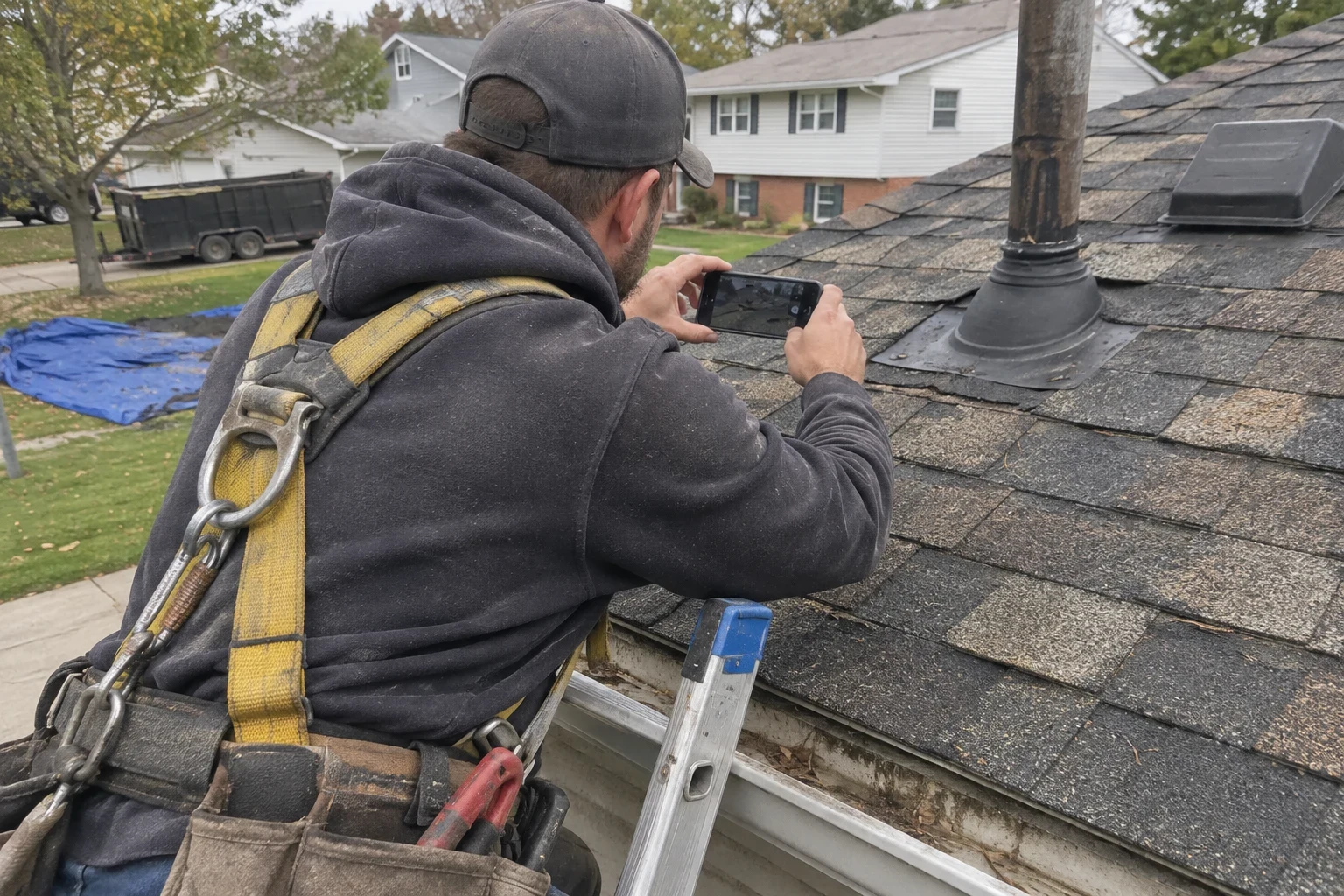
We get on the roof and into the attic, take photos of what we find and talk through whether metal suits your home. You see the deck, ventilation and insulation picture before deciding anything.
- 2
Written, line-item estimate
You get the panel type, gauge, finish, underlayment, flashing and any deck repair listed separately, so you know where every part of the price comes from. We pull the permit as part of the job.
- 3
Installation days
We protect your yard, tear off in sections and dry in each area the same day so your home is never left open. Panels and trim go on next, then ridge vents and final flashing.
- 4
Walkthrough and cleanup
We sweep the property with magnets, haul off debris and walk the finished roof with you. You get photos of the work, including the parts that are now covered.
Why metal roof estimates vary
A metal roof carries a higher starting price than asphalt shingles, and two metal estimates for similar homes can still differ quite a bit. Most of that gap comes from the panel system you choose and the shape of the deck once the old roofing is off. Financing is available, so if a single payment feels like too much, bring it up when we sit down with your estimate.
- Standing seam or exposed fastener
- Concealed-clip standing seam needs more material and more hours on the roof than exposed-fastener panels. The tradeoff is far fewer screws to inspect and reseal as the years go by.
- Steel thickness and paint system
- Heavier-gauge steel shrugs off dents better. Higher-grade finishes with reflective pigments keep their color longer and send more summer heat away from your attic.
- How your roof is shaped
- Every valley, dormer and hip adds cuts and trim pieces, and steep slopes slow the crew down for safety. A plain gable roof comes in lower per square foot.
- What is under the old roof
- Soft sheathing or more than one layer of old shingles adds labor and materials. We cannot be certain until tear-off, and you get photos from us before any wood is replaced.
- Attic venting work
- Adding a ridge vent or clearing blocked soffit intake is a modest line on the estimate. It is often the part that makes the biggest difference in how your upstairs feels in summer.
Common questions about metal roofs
- Will rain sound louder on a metal roof?
- On most homes, no. The panels are fastened over a solid wood deck and underlayment, and your attic insulation sits between the roof and your living space. Homeowners usually tell us it sounds about like their old shingles did.
- Can metal actually cut my energy bills?
- It can bring cooling costs down, particularly with a lighter reflective color and attic ventilation that works. The size of the savings depends on your insulation, your windows and how much shade falls on your home. After we look at your attic, we will give you a straight estimate of what to expect.
- How does metal hold up to hail?
- Big hailstones can leave dents, but thicker gauges and ribbed panels resist them better, and a dent is usually a cosmetic issue rather than a leak. Some panels have impact ratings that certain insurance companies give credit for. Ask your insurer what they recognize, and we will show you which of our options match.
- Do you have to tear off my shingles first?
- Not always, if local code and your deck allow an overlay. In most cases we suggest removing the old roof so we can inspect the wood, repair soft spots and put down proper underlayment. We price both approaches on your estimate so you can compare.
- Are metal roofs more likely to get hit by lightning?
- No. Lightning goes for the tallest object around, and the roofing material plays no part in that. Steel does not burn either, so it will not feed a fire if a strike lands nearby. It is a very common worry, and you can let it go.
- How many days will the installation take?
- Once the materials are delivered, most homes are finished in a few days, depending on roof size, pitch and the weather. Every section we open gets dried in before we leave that day, and we keep you posted on progress.
See if metal makes sense for your home
We will look over your roof and attic, show you photos and tell you straight how metal compares with your other options. You decide on your own time, with the full picture in front of you.