ServicesTPO Roofing
TPO Roofing in Indianapolis
If part of your home has a flat or nearly flat roof, a TPO membrane is often the best fix. We install a white, heat-welded sheet over a solid deck and insulation, so it stays watertight and the room underneath stays cooler.
What TPO Is and When It Makes Sense
TPO is a single-ply roofing membrane that comes in wide white rolls. It is made for low-slope roofs, where shingles do not work because water drains too slowly and can back up under the tabs. On houses we usually put it on porch roofs, rear additions, flat garage roofs, dormers and the low sections that tie two rooflines together.
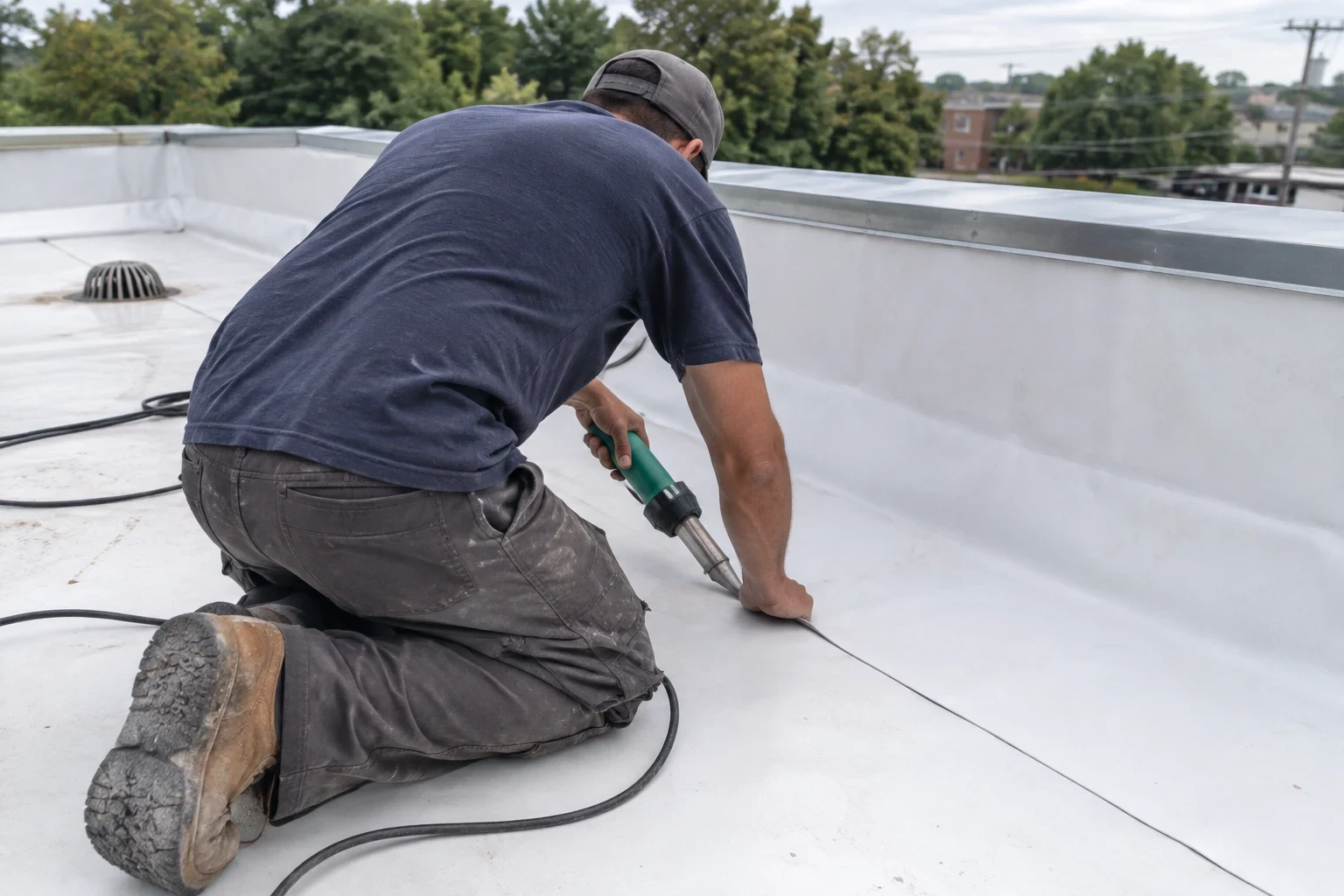
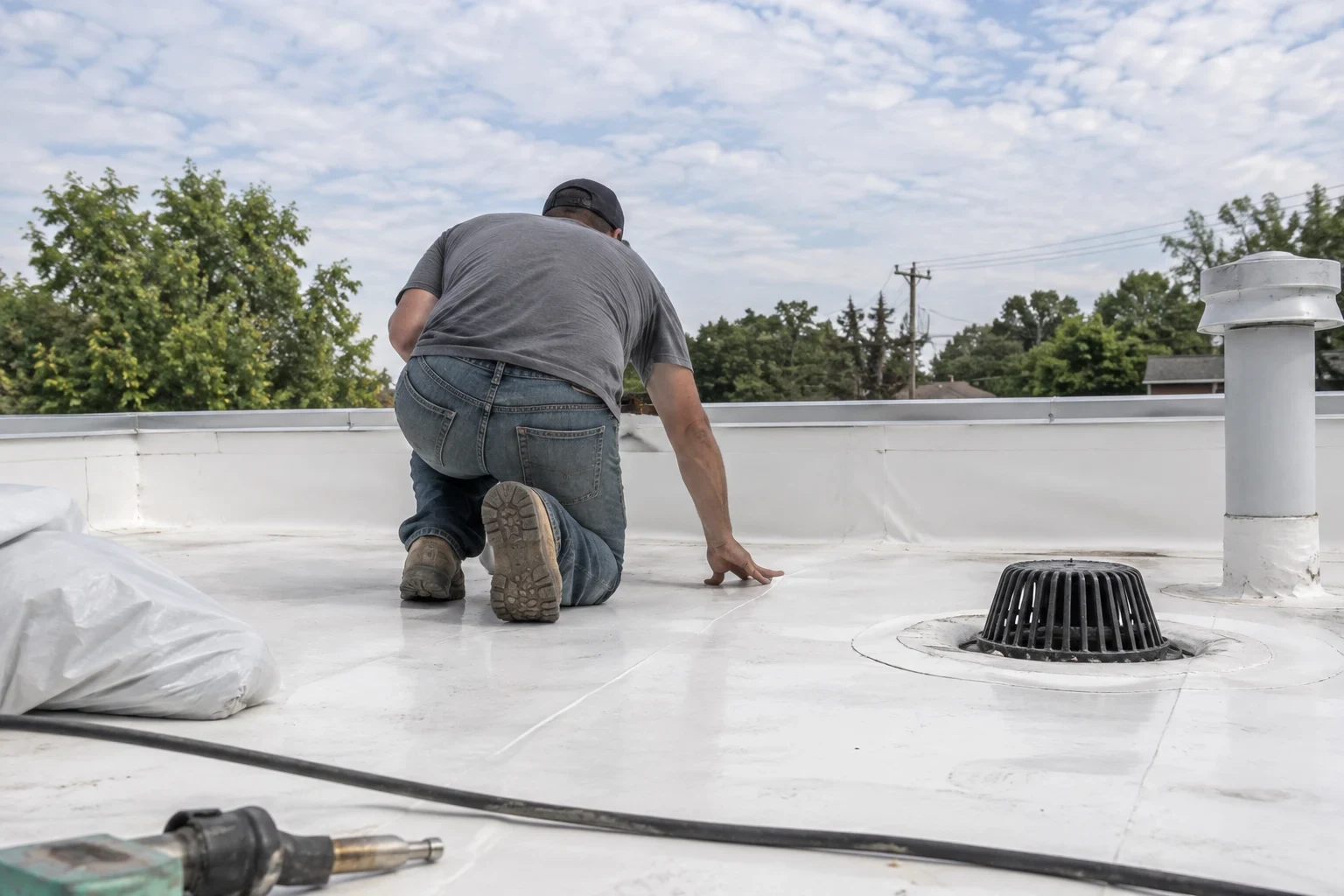
The seams are welded with hot air, which fuses the two sheets into one piece instead of relying on glue or tar. That matters on a flat roof, where water can sit for hours after a storm. When winter brings freeze-thaw cycles, a welded seam has no glued edge for ice to pry open.
The white surface reflects much of the summer sun instead of soaking it up the way dark rolled roofing or tar does. Add a layer of rigid insulation underneath and the bedroom or family room under that roof is easier to keep comfortable, and your air conditioner does less work.
What Your TPO Roof Includes
- Tear-off down to the deck
- We remove the old rolled roofing, modified bitumen or built-up tar so we can see the wood underneath. Putting new membrane over hidden rot only buries the problem.
- Deck repair where it is needed
- Soft or water-stained sheathing gets cut out and replaced. We show you photos of what we found before we close it up.
- Rigid insulation boards
- Polyiso boards go down over the deck to add insulating value and give the membrane a smooth, firm base. Where water has been pooling, tapered boards can build in a gentle slope toward the drain or gutter.
- Membrane and welded seams
- The TPO sheet is fastened or fully adhered, then every seam is hot-air welded and probed to check it is closed along its full length.
- Flashing at walls and edges
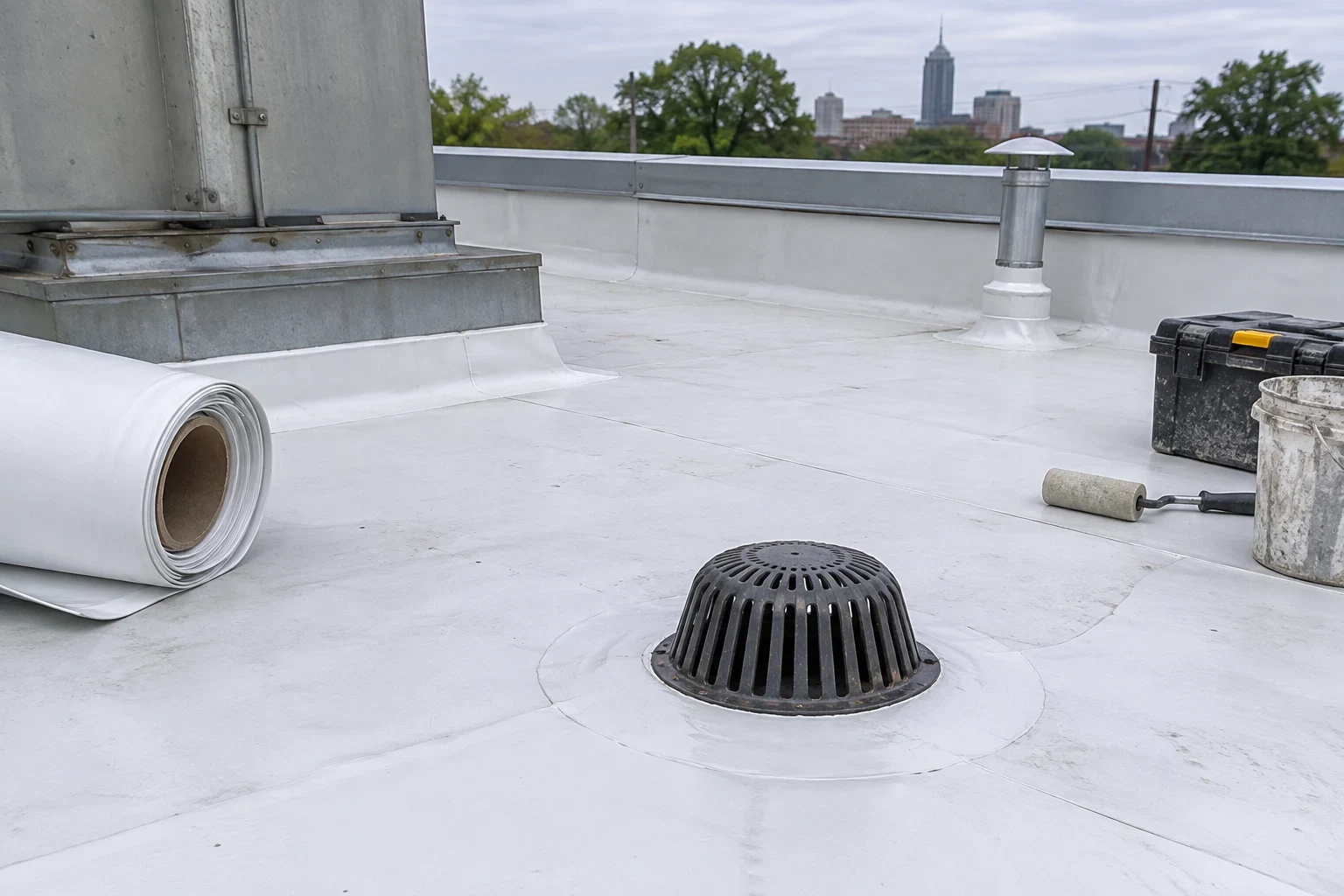
- Where a porch roof meets your siding or brick, the membrane runs up the wall and is held with a termination bar. Edge metal, vent boots and drain outlets are flashed with matching TPO pieces.
- Cleanup and a final look
- Old roofing and scraps get hauled away, and we sweep the lawn and pavement with a rolling magnet to catch stray fasteners. Then we walk the finished roof with you.
Signs Your Low-Slope Roof Needs Attention
Water still standing days later
A little puddling after rain is normal. Ponds that last two days or more are wearing out the surface and finding every weak spot.
Cracked or blistered surface
Old rolled roofing and tar crack, bubble and separate at the laps as they age. Once the top layer splits, water gets under it fast.
Leaks where a porch meets the house
Stains on a ceiling near an exterior wall often trace back to the joint between a flat roof and the wall above it. That joint is the hardest place to keep sealed with older materials.
A room that bakes in summer
If the space under a flat roof is always hotter than the rest of the house, the roof is likely dark, thin on insulation, or both.
Spongy decking
When the roof feels springy or sags a little under your weight, the wood below has probably been soaking up water for some time.
How a TPO Job Runs
- 1
Free inspection
We get up on the roof, check the surface, seams, flashing and drainage, and look for soft decking. You get photos and a plain answer on whether a repair will do or the section needs new membrane.
- 2
Written estimate
Your estimate lists the tear-off, insulation, membrane and flashing line by line, so you can see what you are paying for. We pull the permit when the job requires one.
- 3
Install day
Most residential flat sections are torn off and covered the same day so your home is never left open overnight. We protect landscaping and keep the work area tidy as we go.
- 4
Check, clean and walk-through
Seams get a final probe, we clean up, and we show you the finished roof and how it drains.
What Affects the Price of a TPO Roof
Every flat roof is a little different, so we price after we have seen yours. The biggest swings come from what is under the old roof and how much insulation you want. If paying over time fits your budget better, we offer financing and can go over it when you call.
- Roof size and shape
- Square footage sets the materials, but corners, odd angles and tie-ins to sloped roofs add labor.
- What comes off and what is underneath
- Multiple old layers take longer to remove, and damaged decking has to be replaced before anything goes on top.
- Insulation thickness and slope
- Thicker or tapered insulation costs more up front, but it is where most of the comfort and cooling savings come from.
- Penetrations and wall flashing
- Each vent, skylight, drain and wall joint needs its own detail, so a roof with many of them takes more time.
- Access
- A low porch roof is quick to reach. A second-story section over a tight yard needs more setup to get materials up safely.
TPO Roofing Questions
Something not covered here? (317) 648-5518
Is TPO only for commercial buildings?
No. It is common on commercial roofs, but it works just as well on the flat and low-slope parts of a house. Porch roofs, additions and garages are where we use it most. Sloped sections of your home are better served by shingle roofing or metal roofing.
Will a white roof really lower my cooling bill?
It helps most for the room directly under it. A white membrane reflects much of the sun that a dark roof would absorb, and the insulation beneath slows heat moving into the room. How much you save depends on how that space is used and how your home is cooled, so we will not promise a number.
Can you install TPO over my old roof?
Sometimes it is possible, but we usually recommend tearing off. Going over the top hides any rot in the deck and can trap moisture. Once we inspect it, we will tell you honestly which route makes sense for your roof.
How does TPO handle snow and ice?
Well, as long as the roof drains. The welded seams resist water that sits and refreezes, which is where older flat roofs tend to fail. If your roof has low spots, tapered insulation can move water off before it has a chance to freeze.
How long does the job take?
A typical porch or addition roof is done in a day. Larger sections or roofs with a lot of rotted decking can take longer, and we will tell you the expected schedule when we give you the estimate.
Find Out What Your Flat Roof Needs
We will check the membrane, seams and decking, then tell you plainly whether a repair will hold or the section is due for new TPO. Financing is an option too, so bring it up on the call if it would help.