ServicesRoof Replacement
Roof Replacement in Indianapolis
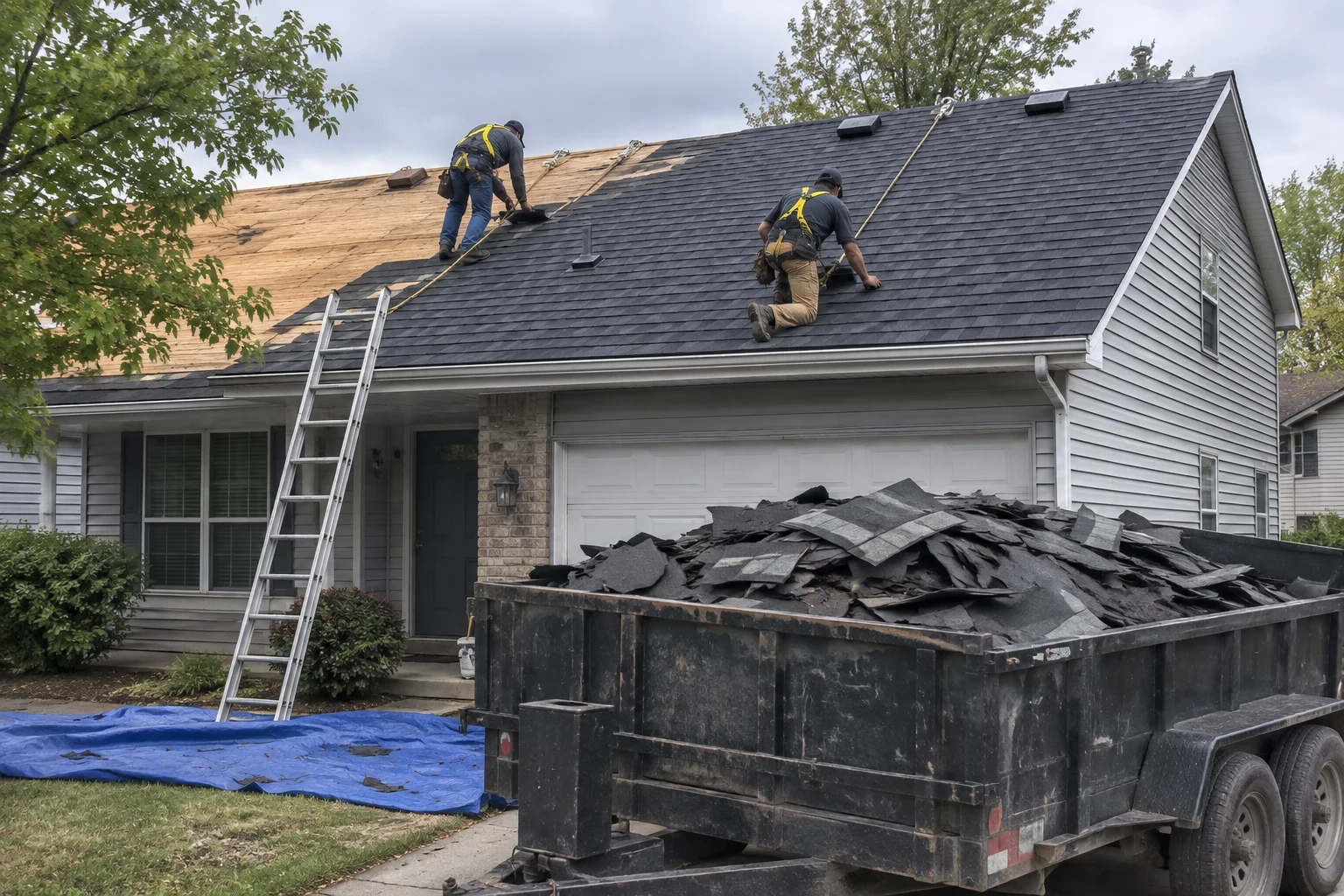
When repairs no longer keep the water out, we take your roof down to bare wood and install a new system that sheds rain, lets the attic breathe and helps upstairs rooms stay comfortable. It starts with a free inspection and an honest answer on whether replacement is needed now.
Knowing when replacement makes sense
A worn-out roof rarely quits overnight. You start finding grit in the gutters, flashing that has worked loose, or a ceiling stain after a hard rain. Sooner or later each repair bill buys less time than the last, and the money does more good going toward a new roof.
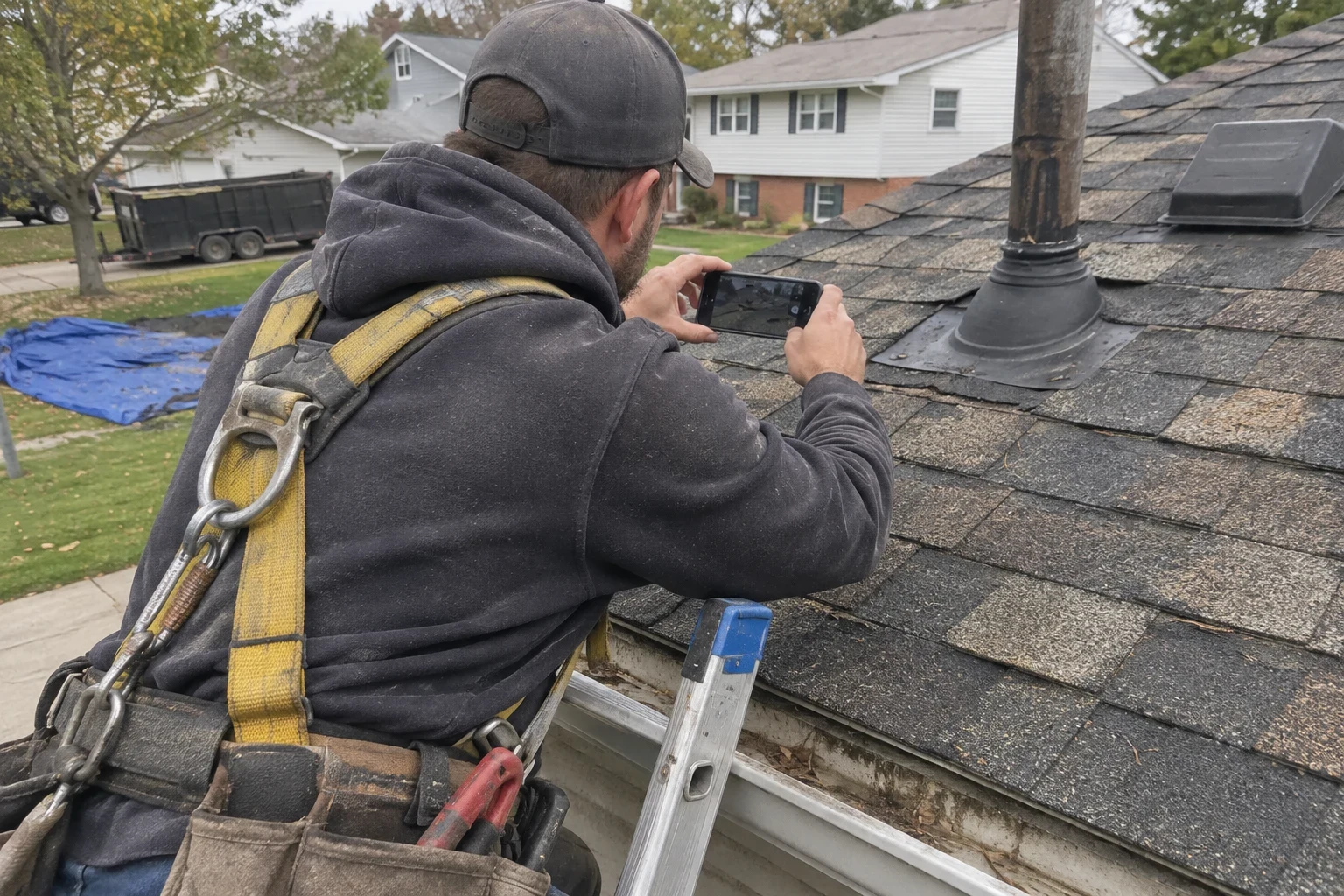
At the inspection we tell you honestly where your roof stands. If a few fixes will carry it for several more years, we say so and point you toward roof repair. If it is close to done, the photos we take will show you why.
Reroofing also opens up the parts of your home you never see. Many older houses were built with too little attic ventilation, so heat builds up in summer and moisture collects in winter. Fixing that while the roof is off can make bedrooms easier to cool and help the new shingles reach their full life.
Everything that goes into your new roof
Old roof removed completely
Every existing layer comes off instead of being covered over. That exposes the decking for a proper look and spares your framing the extra load.
Decking checked and fixed
Any sheathing that is soft, rotted or separating is replaced before new materials go on. We take photos of the problem boards and talk it through with you first.
Leak barrier and underlayment
A self-adhering ice and water barrier goes along the eaves, in the valleys and around penetrations, where freeze-thaw ice dams tend to force water back under shingles. Synthetic underlayment covers the remaining deck.
Attic airflow set right
We measure intake at the soffits against exhaust at the ridge and adjust until they match. Good airflow keeps the attic cooler in summer and drier through the winter.
Fresh flashing and drip edge
Chimneys, sidewalls, vents and skylights all get new metal rather than the old pieces bent back into place. Reused flashing is a weak spot that can let water slip in around the edges of an otherwise brand-new roof.
Property protection and cleanup
Tarps cover your shrubs and flower beds while we work. When we finish, every scrap is hauled off and a rolling magnet goes over the lawn, driveway and beds to pick up loose nails.
How to tell your roof is wearing out
- Shingles losing grit or curling
- A pile of granules in the gutters, or shingle edges that cup and lift, tells you the asphalt is drying out. When that shows up across the whole roof, spot repairs fall behind.
- Leaks that keep moving
- A single leak is usually fixable. When new ones turn up every season in different places, the underlayment or flashing is likely worn out roof-wide.
- A roofline that dips
- Low spots between rafters, or decking that gives when stepped on, usually mean moisture has been soaking the wood for a while.
- Stuffy bedrooms and heavy icicles
- Upstairs rooms that hold heat well into the evening, or thick icicles hanging from the eaves each winter, often come down to weak attic ventilation. Replacement is a good moment to correct it.
- Storm hits on an older roof
- Hail or high wind on a roof already near the end of its life often settles the question. If you are filing a claim, our storm damage repair crew can record the damage.
What to expect from start to finish
- 1
Roof and attic walkthrough
We climb up, look over the attic from inside and take pictures along the way. You hear whether repair or replacement fits before we discuss any cost.
- 2
Itemized estimate in writing
Materials, ventilation work and a decking allowance each get their own line, so it is clear what drives the total. If your job needs a permit, we pull it.
- 3
Strip-off and same-day dry-in
Most houses take a day or two. We shield your siding, windows and plantings, remove the old roof and lay underlayment before we leave, so your home is never sitting open overnight.
- 4
Final walk and yard cleanup
Once shingles, flashing and vents are installed, we go over the finished roof together. Your yard is left tidy, with debris gone and nails swept up.
What moves the price of a replacement
No two roofs share the same measurements or condition, so we price yours after we have been up on it, not over the phone. The inspection costs you nothing, and your estimate breaks the job into separate lines. If spreading the cost out would help, we offer financing.
- Roof size and pitch
- A bigger roof takes more shingles, more underlayment and more crew time. A steep pitch adds harnesses and roof jacks and slows the pace, since every step up there has to be deliberate.
- How many old layers come off
- Stripping two layers of old shingles takes more labor and more disposal than stripping one.
- Condition of the decking
- Any sheathing that has to be replaced is priced by the sheet. You see a photo of each damaged board before it is swapped out.
- The material you pick
- Architectural shingles, metal roofing and TPO for low-slope areas differ in both cost and how long they last.
- Vents, valleys and penetrations
- New ridge or soffit vents add to the job, as do chimneys, skylights and valleys that need extra flashing and labor.
Common questions about a new roof
- Is it okay to roof over my existing shingles?
- We advise against it. A second layer covers up the decking so nobody can check it, puts more weight on the framing and holds more heat in the attic. Taking everything off gives us the chance to repair rot and fix ventilation while the deck is exposed.
- Will a new roof cut my heating and cooling bills?
- It can make a difference, though we will not put a number on it. Most of the benefit comes from fixing attic ventilation and picking lighter or reflective materials, which keep roof heat from reaching the living space. Insulation and your HVAC system play a big part too, and we will tell you honestly what the roof can and cannot do on its own.
- Does someone need to be home while you work?
- Not all day. We prefer a quick walk around the property with you before we start and another once we finish. Please keep pets indoors and move cars off the driveway for the duration.
- Could my insurance pay for a replacement?
- If a storm caused the damage, we work with homeowners and insurance companies on storm damage claims. We record the damage with photos and measurements and walk you through the steps, and the adjuster decides what is covered.
- How do I choose between shingles, metal and TPO?
- For most houses around Indianapolis, Carmel and Greenwood, architectural shingles are a strong fit, and our shingle roofing page explains why. Metal has a longer life and reflects more summer sun. Flat or low-slope areas generally perform best with TPO. We go over the pros and cons with you at the inspection.
Find out where your roof really stands
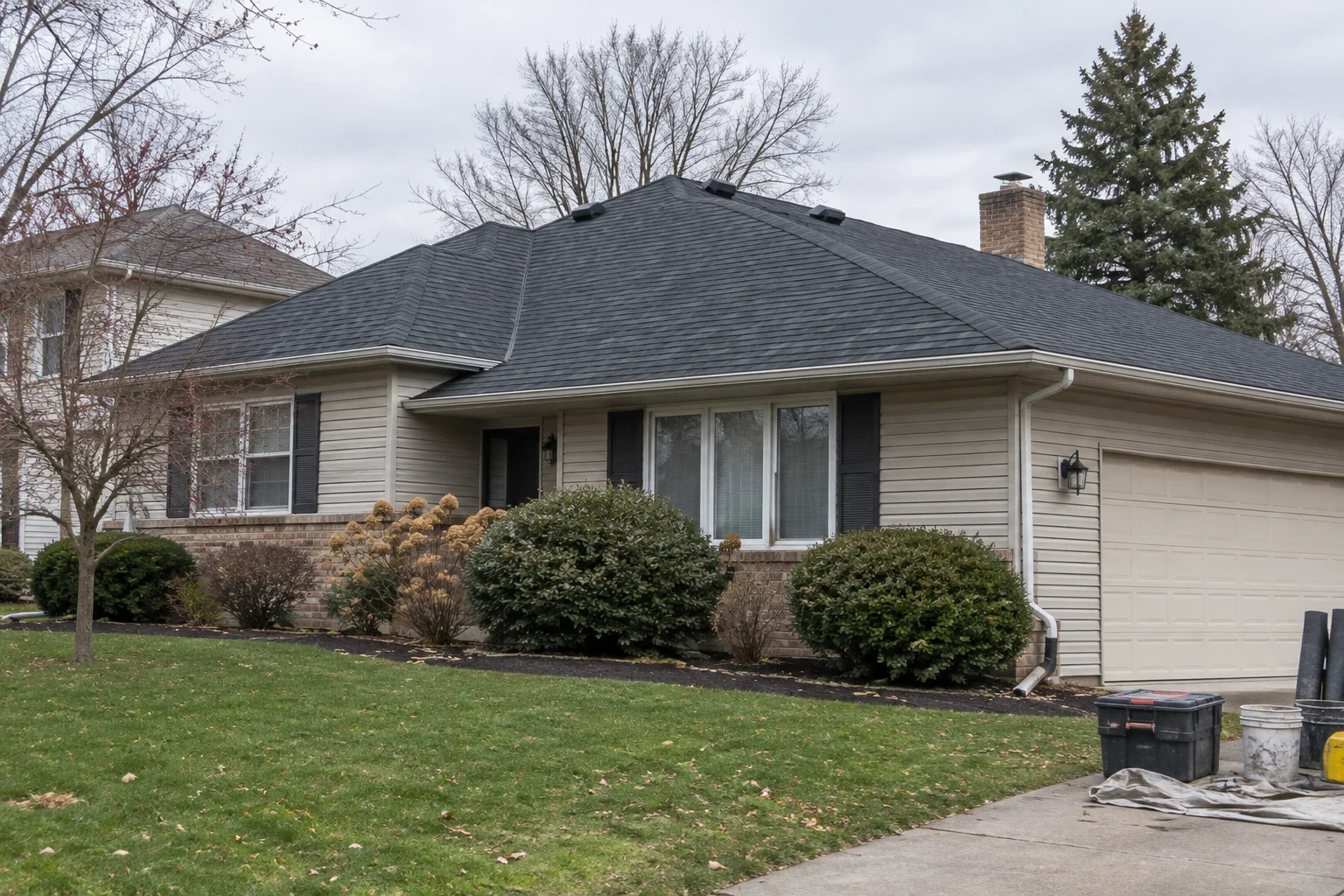
We will inspect the roof and the attic, show you the photos and give you a written estimate with nothing hidden. If repair is enough, we will tell you that too.