ServicesRoof Repair
Roof Repair in Indianapolis
A small leak rarely stays small. We find where water is actually getting in, fix that spot properly and check the insulation underneath, because damp insulation quietly drives up heating and cooling bills. You get a clear answer on what needs fixing now and what can wait.
When a Repair Is the Right Call
Most roofs that leak do not need replacing. The trouble usually sits in one place: a lifted shingle, a cracked pipe boot, flashing that has pulled away from a chimney or wall. Fix that spot correctly and the rest of the roof can keep doing its job for years.
The hard part is finding the source. Water travels along decking and rafters before it shows up as a ceiling stain, so the drip in your bedroom may start several feet uphill. We trace it from the attic and the roof surface before we touch anything.
We also look at what the leak has done inside. Insulation that has soaked up water loses much of its ability to hold heat, which is why a leaky roof often comes with a colder upstairs and a higher furnace bill. Repairing the roof and dealing with the wet insulation together is what brings your comfort back.
What Goes Into a Repair Visit
- Finding where the water gets in
- Before any shingles come up, we head into the attic and look for water trails, stained wood and damp insulation, then line those clues up with the roof surface above. Fixing the true entry point is what keeps the stain from coming back.
- Shingle replacement
- Missing, cracked or curled shingles are pulled and replaced, with new ones nailed and sealed so they lie flat. We match color and profile as closely as current products allow.
- Flashing and pipe boot repair
- Chimneys, skylights, sidewalls and plumbing vents are where most leaks start. We reseat or replace worn flashing and swap out cracked rubber pipe boots instead of smearing sealant over them.
- Decking and underlayment fixes
- Sometimes the plywood beneath the roof surface has turned spongy from repeated soaking. When that happens, we remove the weakened boards, fasten in fresh decking and lay new underlayment before the shingles go back on. Nailing new shingles over rotten wood would only hide the problem.
- Ventilation and insulation check
- Blocked vents trap warm, moist air in the attic, which feeds ice dams in winter and bakes shingles in summer. We note vent problems and any wet or compressed insulation so you know what is affecting your energy use.
Signs Your Roof Needs a Repair
Stains on ceilings or walls
Brown rings or bubbling paint mean water has been getting in, sometimes for a while. The sooner it is traced, the less drywall and insulation you lose.
Shingles on the lawn
After a windy night, pieces of shingle in the yard point to a gap on the roof that now lets water reach the underlayment.
Icicles and ice dams along the eaves
Heavy ice at the roof edge usually means attic heat is escaping and melting snow higher up. Our freeze-and-thaw winters make this a common cause of leaks, and of wasted heating money.
Daylight or damp spots in the attic
Pinpoints of light through the decking or dark, wet patches on the wood are a clear sign water and outside air are coming through.
An upstairs that is hard to keep comfortable
Rooms under the roof that run noticeably hotter or colder than the rest of your home can mean wet insulation or poor attic ventilation, both of which we check during a repair visit.
How a Repair Visit Works
- 1
Free inspection and photos
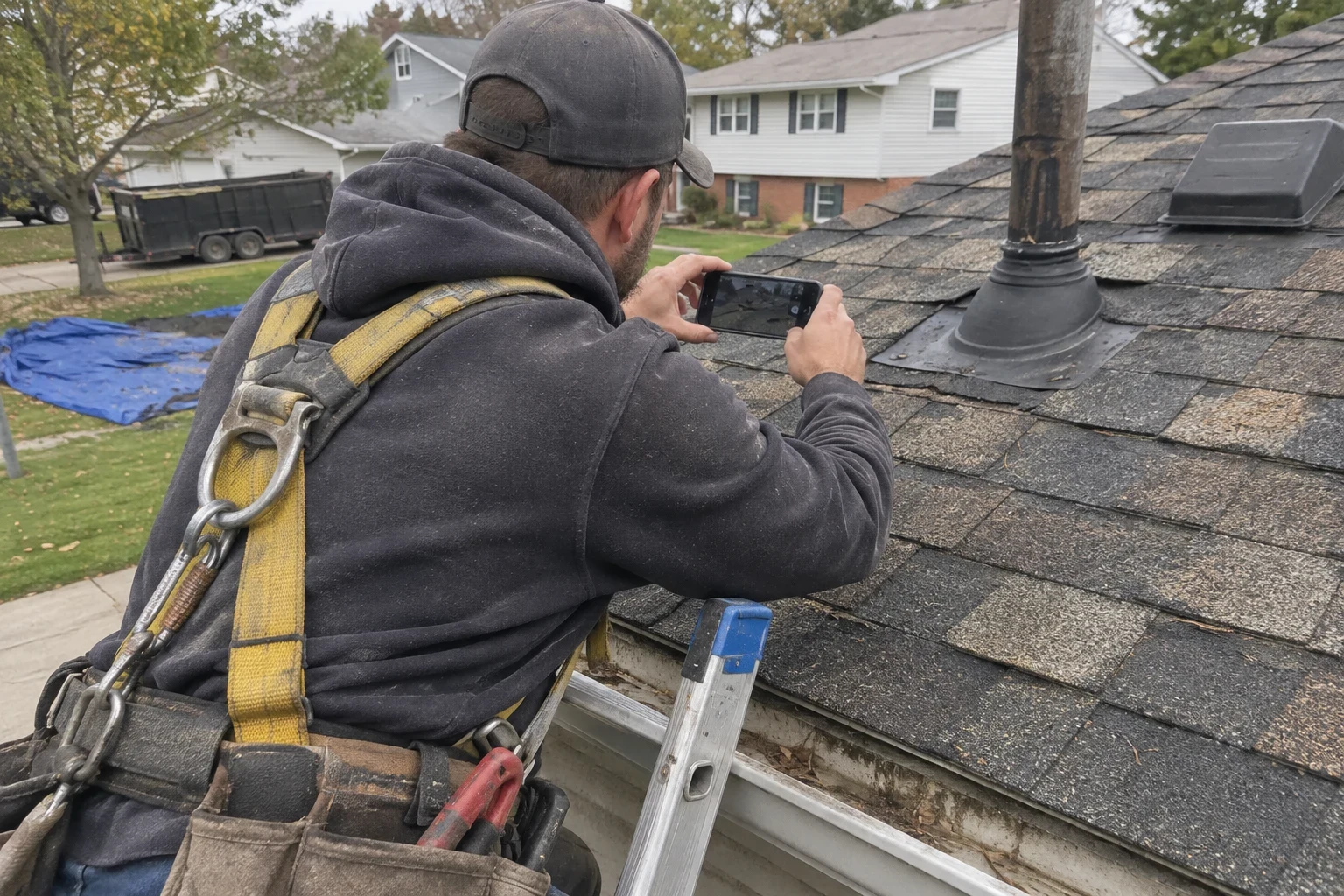
We look at the roof and the attic, find the source of the problem and take photos so you can see exactly what we found.
- 2
A straight answer and a written estimate
We tell you whether a repair will hold or whether the roof is near the end of its life, and put the repair work in writing line by line. If something can wait, we say so.
- 3
The repair day
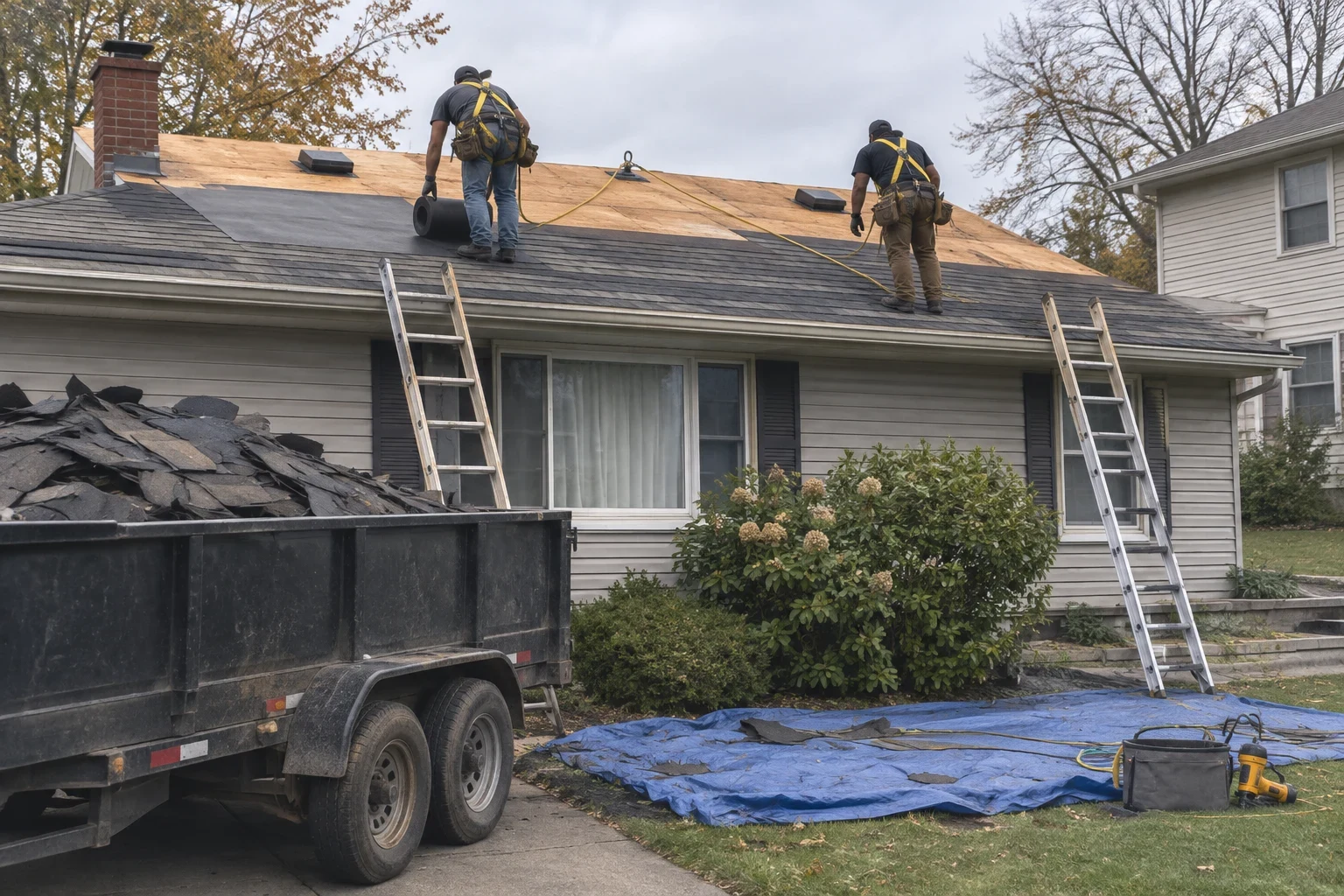
We protect your landscaping and siding, remove the damaged materials and make the repair with matching products. Most repairs take a few hours, though rotten decking can add time.
- 4
Cleanup and a final walk-through
We pick up debris and run a magnetic sweep for nails, then show you the finished work and photos of what is now under the new shingles.
What Affects the Cost of a Roof Repair
We price every repair after we have seen the roof, because a cracked pipe boot and a rotted valley are very different jobs. Your written estimate breaks the work into separate lines, so you can see what each part costs before we start. Financing is available if a larger repair is more than you planned for this month.
- Size and location of the damage
- A few shingles on an easy slope cost far less than work around a chimney or in a valley, where more flashing and careful layering are involved.
- Roof pitch and access
- Steep roofs, tall homes and tight spots need extra safety setup and slower work, which adds labor.
- What is underneath
- Rotted decking or soaked underlayment stays hidden until the shingles come up. If we find it, we stop, show you, and explain the added cost before going further.
- Materials and matching
- Some older or discontinued shingles are hard to match. Specialty flashing, metal panels or TPO patches on low-slope sections also change the price.
Roof Repair Questions
Something not covered here? (317) 648-5518
Should I patch my roof or start planning for a new one?
Two things decide it: how old the roof is and whether the trouble is in one place or showing up everywhere. If the leak is limited to a single area and the shingles around it still feel flexible and hold their granules, a repair makes sense. If the whole surface is brittle and bald in spots, patching one area tends to push the leak to the next weak point. We will tell you plainly which situation you are in, and our Roof Replacement page explains what the bigger option involves.
Will fixing my roof really lower my energy bills?
It can, when a leak or a ventilation problem has been affecting your attic. Wet insulation holds far less heat, and blocked vents make your air conditioner work harder in summer. Once the water is stopped and the insulation dries or is replaced, many homeowners find their upstairs is easier to keep comfortable.
Can you match my existing shingles?
In most cases, very closely. We bring samples and compare color and profile right at your home. New shingles can look a little brighter at first, and they settle in as they weather.
Does homeowners insurance pay for roof repairs?
Policies usually cover sudden damage such as hail or wind, not wear from age. If a storm caused the problem, we work with homeowners and insurance companies on storm damage claims and can photograph what we find for your adjuster. Our Storm Damage Repair page walks through how that goes.
Can a roof be repaired in winter?
Yes, many repairs can be done on cold days as long as the roof is dry and free of ice. Shingle sealant strips need warmth to bond fully, so in cold weather we hand-seal the repaired shingles to keep them from lifting.
Stop the Leak Before It Spreads
We will find where the water is coming from, show you photos and give you a written estimate for the repair. The inspection costs you nothing.