ServicesRoof Inspections
Roof Inspections in Indianapolis
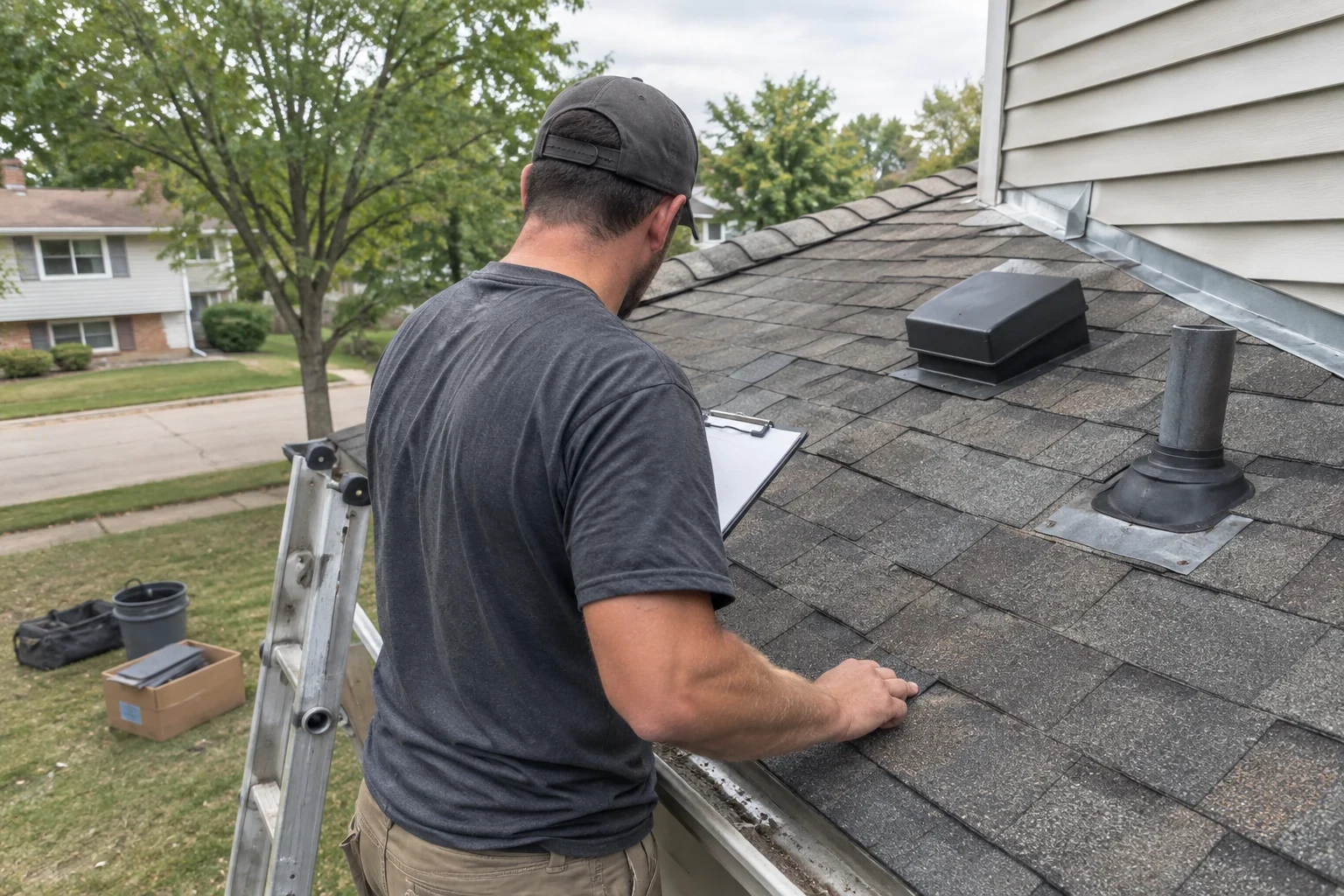
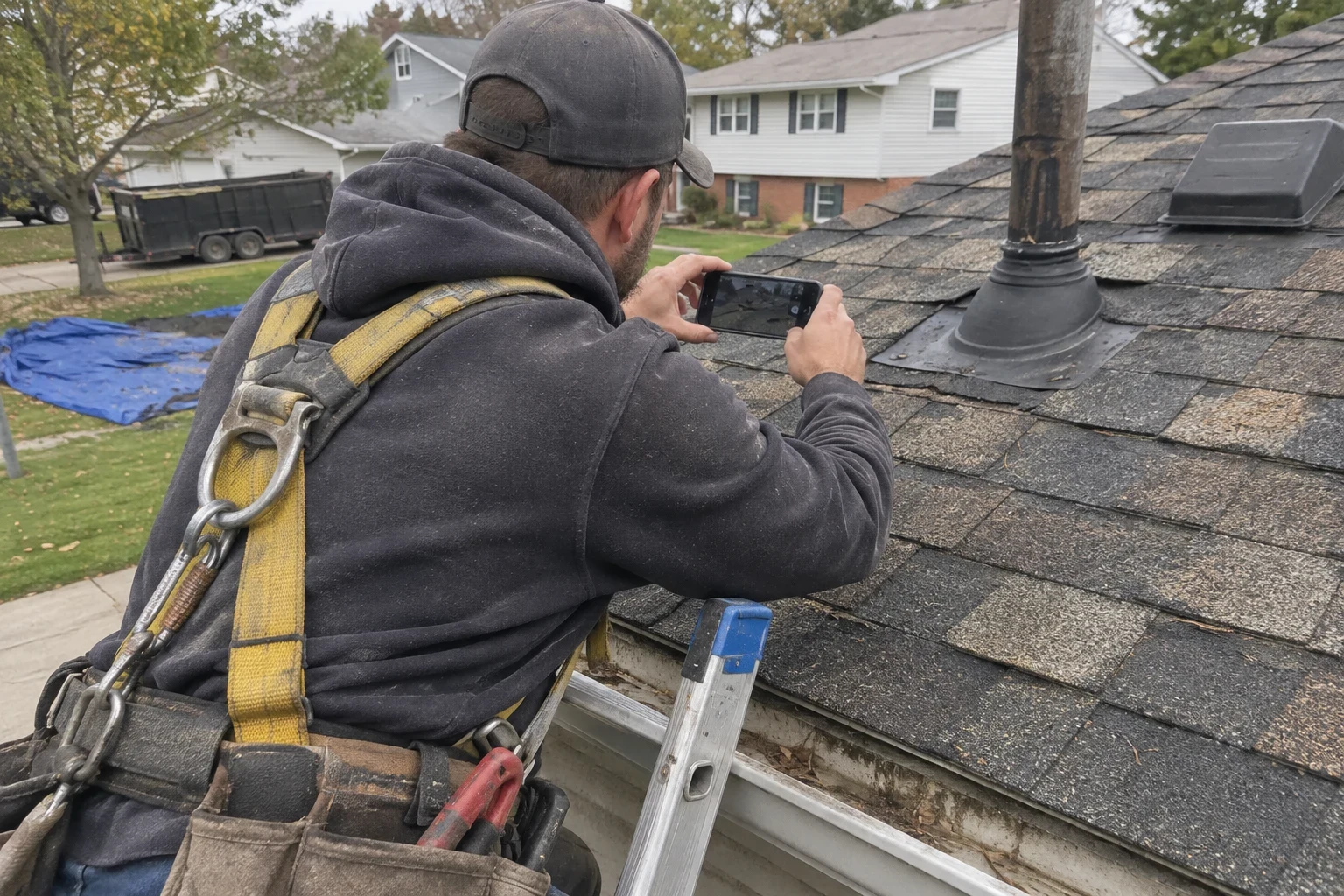
We walk your roof, check the attic underneath and show you photos of everything we find. You get a plain answer on whether it needs repair, replacement or nothing yet, plus a look at the ventilation and moisture problems that quietly push up heating and cooling bills.
What a roof inspection tells you
Most roof problems start small and out of sight. A lifted shingle, a cracked pipe boot or a gap in the flashing can let water in for months before a stain shows on the ceiling. A roof inspection finds those spots while they are still cheap to fix.
We also look at your roof as part of how your home holds heat. Blocked soffit vents, missing ridge venting and damp insulation make the attic hotter in summer and let warmth escape in winter. That shows up as higher utility bills and upstairs rooms that never feel quite right.
The inspection costs you nothing, and there is no pressure at the end of it. If the roof is in good shape, we will tell you so and suggest when to have it checked again.
What we check during the inspection
- Shingle condition
- Curled edges, cracks, missing pieces and thinning granules all tell us how much life the surface has left. Where the granules have worn away, sunlight starts breaking down the asphalt below.
- Flashing and roof penetrations
- Leaks usually start where something passes through the roof or meets a wall. We check the metal flashing at chimneys, skylights and sidewalls, the sealant along its edges and the rubber boot around every plumbing vent.
- Attic ventilation and insulation
- Up in the attic we trace airflow from the soffit vents to the ridge, check the underside of the deck for frost or mildew, and see whether the insulation is dry and even. Insulation that is damp or flattened stops doing much to hold heat in your home.
- Roof deck and structure
- A spongy feel underfoot, a dip in the roofline or dark stains on the wood tell us moisture has been sitting there for some time.
- Gutters and drainage
- We make sure gutters are secure, pitched toward the downspouts and free of debris, and that water is carried away from the foundation. When water backs up at the roof edge, the fascia board behind it tends to rot.
- A photo report you keep
- We hand you photos of everything we saw, each marked as urgent, able to wait or in good shape. Keep them for budgeting, for a future home sale or for a conversation with your insurance company.
Signs it is time to have your roof checked
Water stains on ceilings or walls
Even a dry, old-looking stain is worth a look. It means water found a way in at some point, and it may still be getting into the insulation.
Icicles and ice dams in winter
Heavy icicles along the eaves usually mean warm air is escaping into the attic and melting snow from below. Indianapolis winters make this a common one, and it is as much an energy problem as a roofing problem.
Rising energy bills or a hot upstairs
If cooling costs have crept up or the top floor stays stuffy all summer, poor attic ventilation is often part of the reason.
A recent hail or wind storm
Hail bruises can be hard to spot from the ground. A check soon after the storm helps if you plan to file a claim.
Granules piling up in the gutters
Sandy grit at the downspouts means shingles are shedding their protective layer and aging faster.
Your roof is 15 years old or more
Older roofs benefit from a check every year or two, so you can plan a replacement on your own schedule instead of after a leak.
What it costs, and what affects any repairs
The inspection itself is free. If we find work that needs doing, the estimate depends on what is actually wrong, and we explain each line so there are no surprises later. Financing is available if a bigger job comes up.
What we find under the surface
A loose shingle is a quick fix. Rotted decking or soaked insulation underneath means more material and more time.
Size and pitch of the roof
Steep or tall roofs need extra safety setup, which affects labor on any repair or replacement.
Ventilation upgrades
Adding ridge vents or clearing soffits is usually a modest add-on, and it can lower attic temperatures and help your heating and cooling run less.
Insurance coverage
When damage comes from a storm, your policy may cover much of the work. We document the damage and work with you and your insurance company on the claim.
How a roof inspection works
- 1
Call and pick a time
Let us know what you have noticed, and we will find a time that suits you. You do not have to be home while we are on the roof, but someone will need to let us in if you want the attic checked.
- 2
Roof and attic check
If the surface is dry and safe to stand on, we go up and step carefully so shingles and gutters are not disturbed. In the attic we use a flashlight and a moisture meter to find damp spots. Plan on roughly an hour for most homes.
- 3
Going over the photos
Afterward we go through the pictures with you, in person or by phone, in plain language. You come away knowing what needs attention soon and what can wait.
- 4
Your call on next steps
When work is needed, you get a written estimate broken out line by line. When it is not, the visit ends there and you owe nothing.
Roof inspection questions
Is the roof inspection really free?
Yes. The visit and the photo report cost you nothing. You have no obligation to hire us for anything we find.
Are you going to push me toward a new roof?
No. Plenty of the roofs we look at need only a minor fix, and some need nothing. The photos let you see each problem for yourself, and we give you an honest read on whether roof repair or roof replacement is the better choice for your home.
Can an inspection help lower my energy bills?
It can show you the cause. Weak attic ventilation and damp insulation force your furnace and air conditioner to run longer. We point those problems out and explain what fixing them would take, so you can decide if it is worth it.
Should I get an inspection after a storm?
It is a smart move, particularly after hail or high wind. Damage often cannot be seen from the ground. Our photos give you a record if you choose to file a claim, and our storm damage repair page covers how we work with insurance companies.
How often should I have my roof inspected?
Once every year or two is a good habit, and more often after a roof reaches 15 years. It also makes sense before you buy or sell a home and after any major storm.
Find out what shape your roof is really in
One visit gets you photos, a clear answer and a look at whether your attic is costing you money. If all is well, we will tell you that too.